
Ukrainian Refugee Crisis: The Current Situation
Published: Dec 9, 2025 Reading time: 6 minutes Share: Share an articleAmong other things, Russia’s full-scale invasion of Ukraine has caused the largest forced migration in Europe since the end of the Second World War. Up to a third of the population of the country has been displaced. Four and a half years after the invasion, ten million Ukrainians remain separated from their homes. Four million people remain displaced within Ukraine itself. Nearly six million refugees have found refuge abroad, not only in Europe but also overseas.
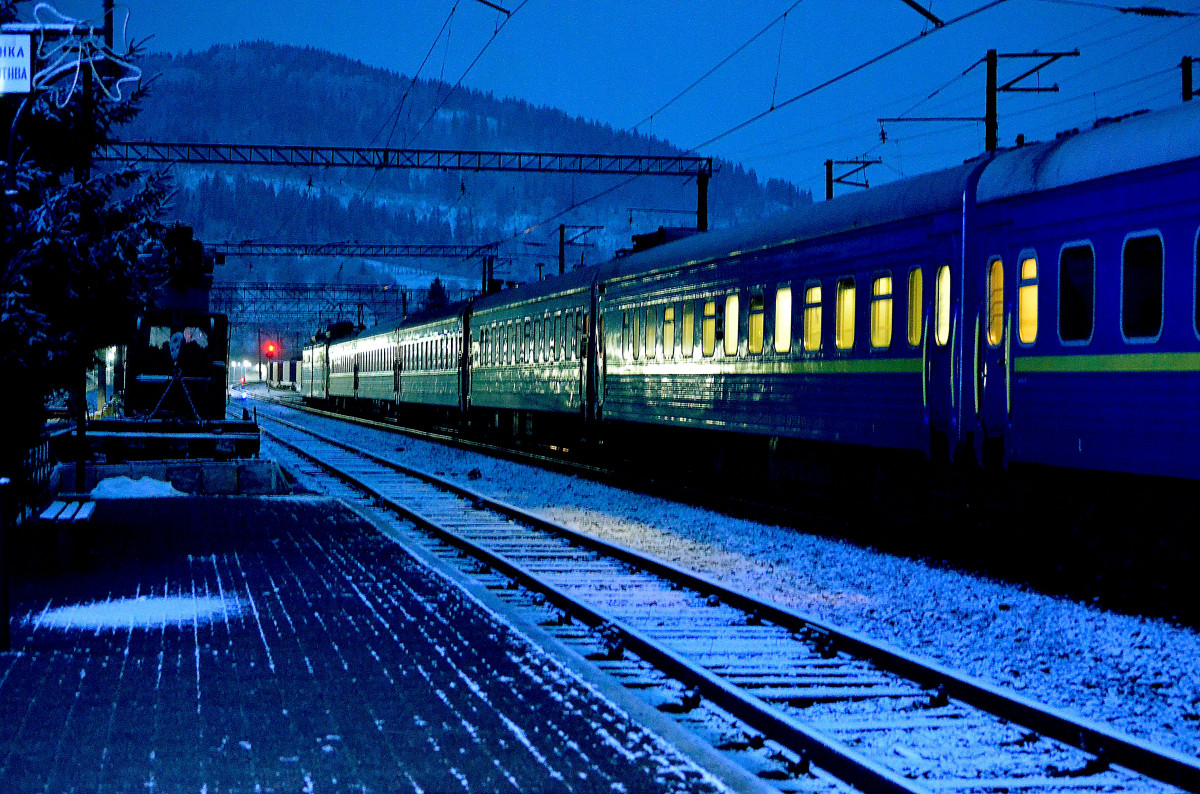
The migration flows triggered by the war are no longer limited to people fleeing Ukraine to the first safe country, but are becoming increasingly complex. Examples include the ongoing movement of refugees between individual European Union member states, migration to Canada, where there is a strong Ukrainian diaspora, and ‘shuttle’ mobility to and from Ukraine, which is particularly intense along Poland’s eastern border.
The situation in Europe
According to estimates by the United Nations High Commissioner for Refugees (UNHCR), there are currently approximately 5.2 million refugees from Ukraine in Europe. Of these, 4.4 million are in European Union member states.
Eurostat data show that the largest number of forcibly displaced people—specifically around 1.3 million—live in Germany. In the first half of this year (2026), the German authorities recorded around 10,000 new arrivals per month, but the actual increase was significantly smaller, as thousands of people were leaving in the opposite direction.
At just under one million, Poland has the second-highest number of refugees. In third place is the Czech Republic, where, according to data from the Ministry of the Interior, there were approximately 395,000 Ukrainians with temporary protection at the end of July. Within the EU, the Czech Republic remains the country with the highest proportion of Ukrainian refugees in its population (3.6 per cent).
Among Western European countries, Spain, the United Kingdom, the Netherlands and Ireland, for example, have taken in large numbers of refugees, although in percentage terms Ukrainians make up a significantly smaller proportion of the population in these countries compared to countries on the EU’s eastern flank. However, it is worth noting that many Western European countries are home to far more refugees (and migrants in general) from other, non-European countries, such as Syria, Afghanistan, Sudan, and Venezuela.
The vast majority of Ukrainian refugees in the EU remain under the temporary protection scheme. This has recently been extended until March 2028. However, an increasing number of EU Member States are already allowing people to switch to long-term residence permits, which give them greater certainty in planning their lives, finding accommodation, and finding employment.
Most EU countries allow the transition to standard long-term stays for the purpose of work, study and/or family reunification. Special long-term stays "tailor-made" for Ukrainian refugees are much less common (Poland, Czech Republic). Overall, the conditions vary greatly from country to country, and we do not yet see the unified approach called for by the European Commission.
Canada and the USA
A significant proportion of Ukrainian refugees have found refuge outside Europe. Since February 2022, over half a million Ukrainians have made their way to Canada and the US. Both countries have introduced special visa arrangements for Ukrainian refugees.
Most of those who went to Canada did so through the CUAET (Canada-Ukraine Authorisation for Emergency Travel) programme, which, amongst other things, made it easier to obtain work and study permits. According to the latest data, Canada has accepted around 300,000 Ukrainians through this programme. At present, new applicants wishing to move to Canada generally use standard residence permits.
Since February 2022, roughly a quarter of a million Ukrainians have moved to the US. They were able to obtain either temporary protected status or a special humanitarian visa granted under the Uniting For Ukraine (U4U) programme, which is based on the principle of individual sponsorship. In January 2025, following the inauguration of the Second Trump Administration, the U4U programme was suspended. Throughout the year, various media reported on problems with extending residence permits, leaving many Ukrainians in a precarious legal situation.
The relatively high level of interest among Ukrainians in emergency relocation to Canada and the US can be explained, amongst other things, by their deep and rich history of migration. A strong Ukrainian diaspora has existed in both North American countries since the nineteenth century.
Russia
There are no reliable and verifiable figures on the number of Ukrainian refugees in Russia. Moscow’s claims about millions of people to whom Russia has provided refuge must, in any case, be firmly rejected. Furthermore, Russian propaganda uses dangerously misleading terminology by routinely referring to forced displacements from occupied territories as ‘evacuations’. However, under international humanitarian law (Article 49 of the Fourth Geneva Convention), these constitute deportations. In March 2023, the International Criminal Court in The Hague issued an arrest warrant for Russian leader Vladimir Putin in connection with the abductions of Ukrainian children. The exact number of children abducted is unknown. Conservative estimates put the figure at around 20,000, but some respected sources cite a number many times higher. Under international law, the forcible transfer of children from one group to another constitutes an act of genocide.
Returnees
Many refugees are returning to Ukraine, but usually only for short periods, for example to visit close relatives, receive essential medical care, or sort out their documents. Expert estimates of the number of people who have returned to Ukraine from abroad on a long-term basis range between 1.1 and 1.4 million. Around three-quarters of this number returned as early as 2022 and 2023.
Refugees’ plans to return change over time. More and more people see their own future and that of their children in the countries where they now live, rather than in Ukraine. According to the UNHCR, roughly half of refugees in Europe hope to return. Far more people would return if the war ended with peace and the return of the occupied territories; conversely, far fewer would return if the fighting ended with only a fragile ceasefire.
The determination to return varies from country to country. Generally speaking, refugees in countries directly bordering Ukraine (Moldova, Romania, Poland) have the strongest desire to return, whilst those in Western Europe (the Netherlands, the United Kingdom, Germany) have the weakest. According to UNHCR findings, just under a third of those surveyed in the Czech Republic plan to return “under any scenario”.
In any case, sociological surveys on the subject of returns must be treated with caution. The key fact is that a large-scale return to Ukraine will only be possible if three basic conditions are met: employment, housing, and security.
Internal refugees
Internal displacement is an often-overlooked but integral part of the Ukrainian refugee crisis. According to a report by the International Organisation for Migration (IOM) from July 2026, the number of internally displaced persons (IDPs, commonly referred to as internal refugees) stands at around 3.9 million, which corresponds to about one-eighth of the total population.
The distribution of IDPs has changed significantly over time: whilst in the first months of the war most people sought refuge in the west of the country, the majority are now in the east, meaning they are moving further away from the front line but are not leaving their region. In the Dnipropetrovsk and Kharkiv oblasts alone, there are now over a million internally displaced persons.

