
EU and People in Need support over 220,000 people in northern Syria
Published: May 18, 2021 Reading time: 5 minutes Share: Share an articleIn Syria, 13.4 million people need some form of humanitarian or protection assistance – a more than 20 percent increase compared to this time last year. Sustained fighting and displacement cycles resulting from the decade-long war continue to affect people’s capacity to meet their basic needs such as food, shelter, water and hygiene. Record-high prices and lack of consistent income opportunities in recent years have only worsened their situation.
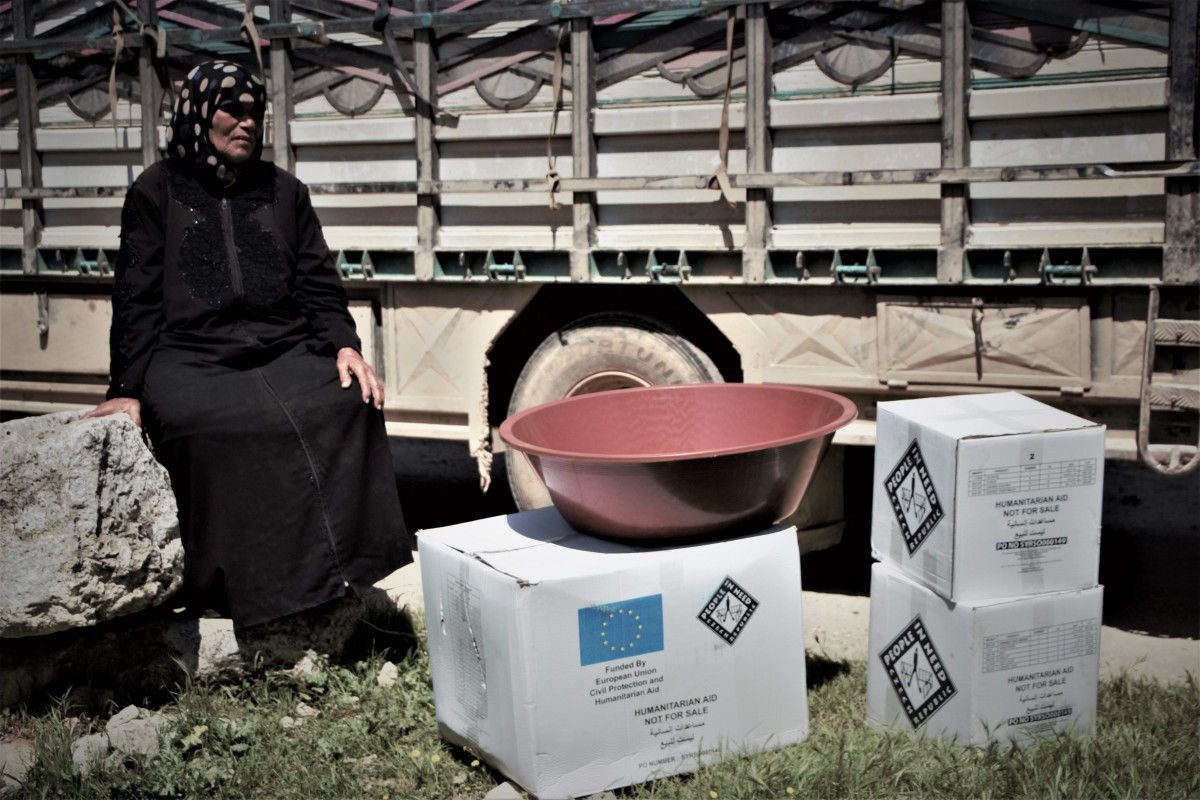
Working on the ground for nine years, and partnering with the European Union for eight years, People in Need is dedicated to addressing the needs of the most vulnerable Syrians. Since June 2019 the latest EU-funded project succeeded in helping 220,000 individuals through various forms of life-sustaining assistance in northern Syria, almost four times the initial target.
“Through this partnership, we have ensured that more than two hundred thousand of vulnerable people, including internally displaced households and host communities, have had their basic survival needs met,” said PIN’s Executive Director, Šimon Pánek. “Mitigating the disastrous effects of the conflict and supporting them to avoid negative coping strategies such as debt or child labor.”
“We are satisfied that EU support to long-standing humanitarian partners like People in Need is making a tangible difference to the lives of vulnerable Syrians who have been severely impacted by the conflict and severe economic crisis,” said Commissioner for Humanitarian Aid and Crisis Management, Janez Lenarčič. “After 10 years, the humanitarian crisis is far from resolved. It is aggravated by the regional economic crisis and exacerbated by COVID-19. The humanitarian needs are higher than ever which is why we need to continue providing life-saving and life-sustaining assistance.”
Based on a rigorous needs-assessment, here are the activities this two-year project implemented and their impact:
Cash assistance
Multi-purpose cash assistance is a dignified way of giving aid, allowing people to have agency over their own needs and freedom in purchasing goods for their families.
• 77,055 individuals benefited from multi-purpose cash grants, either from one round of 130 USD or three rounds of 100 USD each depending on the severity of their assessed needs.
Winterization
Whether it be in an IDP (Internally Displaced Persons) camp or a partially destroyed home, the bitter cold of winter is difficult to endure while in poverty. Winterization cash grants enable households to purchase resources for heating, appropriate clothes, or anything else needed to instill comfort and endurance during the harsh season.
• 21,333 individuals received a one-time Winterization grant in the amount of 155 USD
Food Vouchers
As monthly booklets or rechargeable electronic cards, beneficiaries received a consistent, inflation-adjusted amount of money designed to cover their household’s main dietary needs. Most people buy bulk of absolute basics, such as grains, cooking oil, and sugar. Fresh vegetables and especially meat continue to be too expensive for most families to buy regularly.
• 122,999 individuals benefited from food vouchers. Most families receive eight rounds, while the most vulnerable can receive food vouchers for up to 16 months.
Agriculture
To promote sustainable food security, support for small to medium-sized household gardens is a viable option in some areas. Heads of households received a voucher to purchase seeds or other kinds of small equipment they need to generate a source of food or even a small income.
• 2,226 households (1,339 led by women) received agriculture vouchers to support kitchen gardens and promote sustainable food security.
Hygiene Kits
Access to clean water isn’t always available in IDP camps, nor are the appropriate tools to keep oneself clean and healthy. Hygiene kits contain a range of daily household items such as soap, toothpaste, detergent, and feminine products.
• 76,794 individuals benefited from the distribution of hygiene kits
Child Protection + Psychosocial Support
Child-friendly spaces (CFS) in IDP camps are critical for the protection and support of children of all ages. These spaces allow children to play and develop safely with their peers while catching up on missed schooling through basic non-formal education. This support was adapted to online delivery during camp/school closures from COVID-19 restrictions.
• 1,370 children attended two EU-funded child-friendly spaces in IDP camps, benefiting from structured psycho-social support (PSS) services and a safe space for playing and development.
• 1,900 children received a PIN-created comic book as an additional PSS and behavior-change tool
Protection Referrals + Special Assistance Grants
One humanitarian organization can’t do it all. PIN works with other actors on the ground in many ways, including making referrals when we meet a vulnerable person or family and cannot offer them the specific assistance they need. When another organization meets a household they are unable to help, such as those living in severe poverty, single women leading her household, or a person with a disability or chronic illness, for example, they can qualify to receive cash assistance from PIN.
• 216 individuals were referred to PIN from an external protection actor and received EU-funded cash assistance
Despite the protracted emergency, there is a lot of value investing in early recovery programming in Syria in some areas, such as agriculture support. Between January 2020 and January 2021, the number of households in Syria reporting that their current income was insufficient to meet their needs rose from 61 percent to 83 percent.
“After food support, lack of employment opportunities is consistently rated as the second most pressing issue in communities,” says Joseph Perini, PIN Country Director for Syria. “Assisting the rehabilitation of local market economies is key to building resilience back into conflict affected societies, as well as graduating vulnerable households toward sustainable livelihoods and away from dependence of emergency support.” Sustainability and resilience are goals in humanitarian aid, and with future projects we hope to focus on giving people the skills and tools they need to create a more stable and dignified life for themselves.
Great thanks and appreciation to the European Union for this partnership in making this project possible. Just during the last 2 years European Union contributed 9.3 million euros to the joint project with People in Needs supporting the most vulnerable Syrians. This brings the total amount of EU - People in Need support in aid to Syria to 33.8 million euros since 2013.
For more information, please contact:
In the Czech Republic: Tomáš Kocian, People in Need’s Regional Director for the Middle East
☎ +420 777 787 970, ✉ tomas.kocian@peopleinneed.cz
In the Middle East: Joseph Perini, People in Need’s Country Director for Syria
☎ +964 (0) 751-741-0120, ✉ joseph.perini@peopleinneed.cz

